Image
Space icon
Space

Underscoring the vital role space-based technologies and research play in economic growth, scientific advancement and international cooperation, this research area builds on Portugal’s long history with the European Space Agency and the country’s growing role in the space value chain. MPP is supporting research, innovation and industrial development across three complementary dimensions: using space data and signals to enable new services and markets; development and operation of space systems, infrastructures and satellite technologies; and the strengthening long-term scientific capacity, education and international partnerships.

Among research topics for this area are small satellites and miniaturized platforms, climate and ocean monitoring and space-ocean interactions, and advanced materials and propulsion systems. In investigating these and other research priorities, MPP is promoting collaboration among academia, industry and public institutions, as it fosters internationalization and the democratization of access to space.

Funded Projects

  • Calls: 2019 Call for Flagship Projects

    Research Areas: Earth Systems: Oceans to Near Space, Space

    Abstract: One of the most valuable resources we have to protect are the world’s Oceans. They have a prominent role in the Earth ecosystem, as they cover most of the Earth’s surface, contain millions of plants and animals, influence global weather, and produce about 70 percent of the oxygen we breathe. Oceans are thus essential for technological, scientific, economic and social development, having enabled exploration and commerce for hundreds of years. As Portugal starts to assume a stronger position as a robust space-faring nation, the Consortium looks for the scientific and economic synergies from New Space technologies and opportunities that could be leveraged to prospect, monitor and value the Oceans in a sustainable manner, aligned with both the “Atlantic Interactions” research agenda and the UN Sustainable Development Goals.

    ----------------------------------------------------------------------------------------

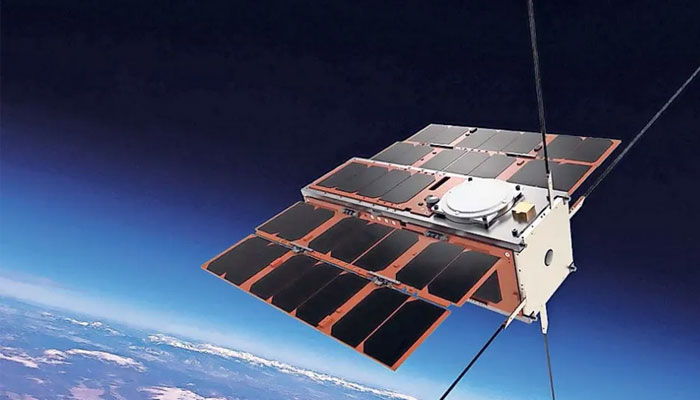
    The Consortium shall develop Portuguese technologies and competences to monitor and value the ocean, by combining national and international knowhow to build the AEROS nanosatellite constellation Managed from Portugal. AEROS is an integrated system of assets and capabilities including different existing, improved, and new platforms operating in the Ocean and Space, equipped with state-of-the-art sensors and technologies, all connected through a communication network linked to a data gathering, processing and dissemination system. 

    To promote the national scientific and entrepreneurial ecosystems, and boost the links and connections between both, AEROS combines private companies like Edisoft, SpinWorks and DST, universities, as UMinho, FCUP, UAlgarve, IST and IMAR, as well as research and interface institutions including CEiiA and +Atlantic. To fast track innovation and industrial development and the internationalization that AEROS can achieve, the national entities have partnered with researchers from different fields within MIT. 

    AEROS will develop and launch into orbit a new nanosatellite platform as a precursor to a future constellation that can leverage the great potential of the study of the Earth, its oceans and atmosphere in liaison with advanced communications technologies to deliver tangible scientific and economic value to society.

    Leading Institution
    Hélder Silva
    Head of Space Software and Embedded Systems

    Manuel Coutinho
    Embedded Systems Technical Manager

    Teresa Cardoso
    Defense Security & Space Director

    José Freitas
    Space Systems – Sales & Business Development

    Participating Institutions

    IMAR; CEiiA; AIR CENTRE  ; SPINWORKS ; DSTELECOM ; +ATLANTIC  ; University of Minho ; FCUP University of Porto  ; University of Algarve ; Técnico, University of Lisbon ; MIT ;

    PT Research Team

    From DSTelecom:
    Sérgio Fernandes
    Catarina Araújo
    Nuno Morgado

    From AIRCentre:
    Pedro Freire Silva
    Tânia Chen

    From University of Minho:
    Eduardo Pereira

    From University of Algarve:
    Flávio Martins
    João Janeiro

    From University of Porto :
    Frederico Francisco
    Orfeu Bertolami

    From CEiiA:
    André João
    Inês Brandão
    Liliana Baptista

    From Spinworks :
    Tiago Hormigo

    From Técnico Lisboa :
    Joana Mendonça
    Rodrigo Lapa

    MIT PIs

    Prof. Kerri Cahoy
    MIT Department of Aeronautics and Astronautics

    Prof. Richard Linares
    MIT Department of Aeronautics and Astronautics

    Prof. Dava Newman
    MIT Department of Aeronautics and Astronautics and Harvard-MIT Health, Sciences and Technology

    Duration: 3 years
    Begin Date: 19, Nov 2020

    Updates & Impact
  • Calls: 2025 Call for Seed Grant Proposals

    Research Areas: Space

    Abstract

    Earth’s oceans are our planet’s largest defining feature and an invaluable resource as they contain millions of algae and animals responsible for sustaining large ecosystems that supply oxygen and food. Monitoring key features of the ocean provides critical insight to how its behavior is changing and how that affects maritime industries and ecosystems. This seed proposal builds upon prior work with MIT Portugal’s AEROS to take it to the next generation of development. We propose to use MIT’s available NASA CSLI launch opportunity (a $300k value) and existing CubeSat hardware (see Figure to engage with our MIT Portugal collaborators in taking the next-generation step for remote sensing with CubeSats: testing an AI-optimized processor in space and running algorithms relevant to maritime industry, such as looking for ocean fronts, coastal morphology and color change, and harmful algal blooms.

    MIT PI
    Kerri Cahoy, Professor, Department of Aeronautics and Astronautics

    PT PI
    Catarina Cecilio, Researcher +ATLANTIC CoLAB
    Dr. Jorge Fontes, Researcher at the University of the Azores, Okeanos

  • Calls: 2025 Call for Seed Grant Proposals

    Research Areas: Space

    Abstract

    This project advances a novel plasma-based reactor for carbon dioxide conversion (CO2) and oxygen production under Mars-relevant conditions, supporting in-situ generation of valuable resources on Mars. Building on a prior MIT Portugal seed grant, we propose to design, construct, and test a plasma reactor integrated with oxygenpermeable membranes to selectively extract oxygen from the reaction products. The plasma is produced using Nanosecond Repetitively Pulsed (NRP) discharges, an energy-efficient technique that can reach up to 100% CO2 conversion. The integration of separation-technology addresses one of the main bottlenecks of the technology: the inability of plasmas to produce a pure stream of products. The system will be characterized across key parameters, including pressure, plasma power, and feedstock composition with a focus on measuring reactorperformance metrics: conversion fraction and energy efficiency. The work aims to elevate the technology from NASA Technology Readiness Level (TRL) 3 to TRL 4 by demonstrating a functional laboratory prototype. In addition to enabling sustainable oxygen and fuel production on Mars, the insights gained will inform scalable CO2 conversion systems for Earth-based decarbonization.

    MIT PI
    Carmen Guerra-Garcia, Associate Professor, Department of Aeronautics and Astronautics

    PT PI
    Vasco Guerra, Professor of Physics, Instituto Superior Técnico (IST), Universidade de Lisboa
    Tiago Silva, PhD, Assistant Researcher, Instituto Superior Técnico (IST), Universidade de Lisboa

News